Home › Industrial and Heavy-Duty Asphalt Paving
We provide industrial asphalt paving in Columbus, OH for truck yards, loading docks, equipment areas, and heavy traffic routes. Our designs use thicker sections and stronger mixes to handle repeated loads and harsh use. Get rugged, low maintenance pavement that supports your operations without constant repairs.
Prestige Asphalt Columbus provides professional industrial asphalt paving throughout Columbus, OH and the surrounding area. Our licensed, insured crew delivers safe, clean, on-time work with a free estimate before anything begins. Call (614) 914-2949 or request your free quote.
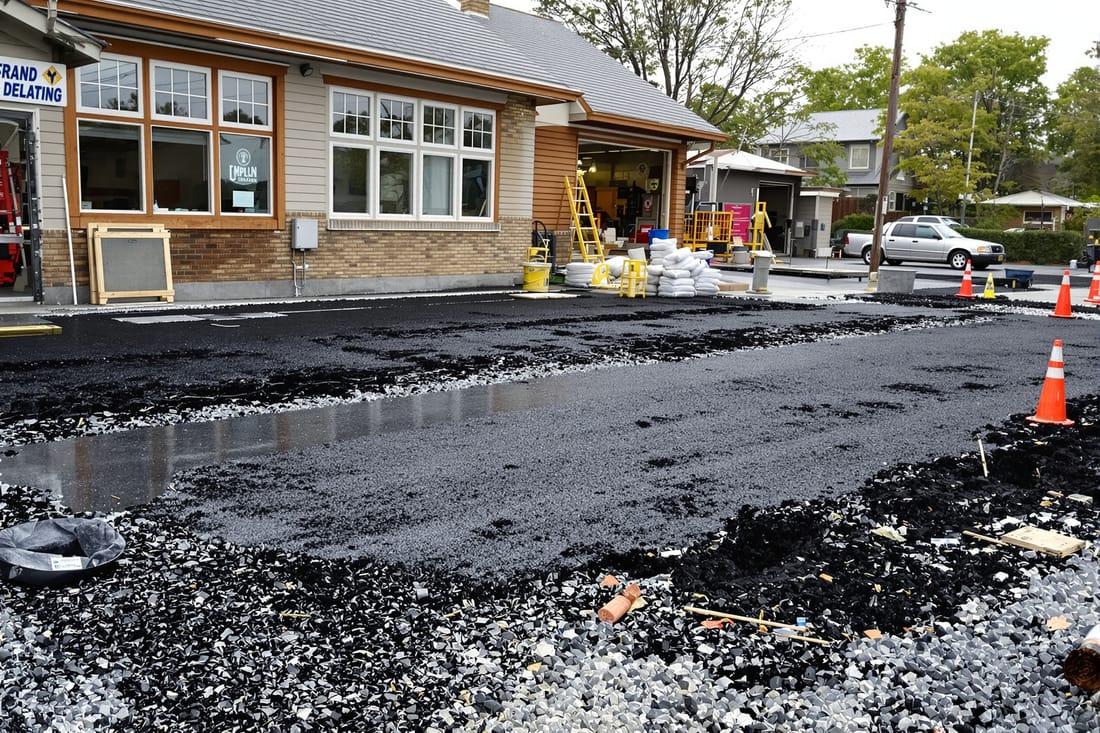
Industrial asphalt paving that holds up to real abuse
Industrial asphalt paving is not about making a surface look black and shiny. It is about building pavement that can take constant truck traffic, forklifts turning in place, heavy loaders, and fuel or chemical drips without breaking apart in a few seasons. Prestige Asphalt Columbus focuses specifically on heavy-duty sections like loading docks, truck courts, container yards, equipment storage pads, and access roads around industrial facilities.
In central Ohio, freeze-thaw cycles, road salt, and wide temperature swings beat up pavement faster than many owners expect. That is why our industrial designs in Columbus start with higher asphalt thickness, stronger stone bases, and mix designs that handle high loads instead of just passenger cars. We match pavement sections to your exact wheel loads and traffic patterns so you are not paying for excessive thickness where you do not need it, and you are not underbuilding where trucks and trailers sit or turn all day.
Our team is used to working in active plants, warehouses, and distribution centers. We plan staging and traffic control so inbound and outbound trucks can keep moving, often paving in phases or off hours so your operations do not shut down while we rebuild your pavement.
How industrial asphalt paving is actually built
For industrial asphalt paving projects, Prestige Asphalt Columbus follows a sequence that focuses on the structure under the blacktop, not just the surface.
We start with a site walk to map out drainage paths, truck turning radii, trailer storage areas, dock approaches, and high-impact spots like fuel islands and dumpster pads. We note overhead clearances, underground utilities, and any soft areas where trucks already rut the ground. From there, we develop a pavement cross section that includes excavation depth, stone base thickness, asphalt lift thicknesses, and any reinforcement or concrete transitions.
Existing pavement is milled or removed to the depth needed for a proper base. In industrial yards, this often means 8 to 12 inches of excavation instead of the shallow cuts you see in retail lots. We install and compact an aggregate base using ODOT approved materials, typically 304 or 411 limestone, brought to proper moisture and compacted in thin layers with vibratory rollers. We will not pave until density tests or proof-rolls confirm the base is stable under heavy truck loads.
Asphalt is placed in multiple lifts. A common heavy-duty section might be 3 to 4 inches of base asphalt and 1.5 to 2 inches of surface mix, but we adjust based on your axle loads and budget. We use pavers with automatic grade and slope controls to hold smooth transitions at dock plates and avoid puddles near doors. Joints are overlapped and compacted while hot to prevent early cracking where lanes meet.
Where forklifts turn in tight circles or trash trucks pivot in a small radius, we sometimes thicken the asphalt locally or change the mix in those zones to avoid shoving and rutting. Around dumpster pads, compactor pads, and some loading docks, we often recommend concrete pads tied into the asphalt so the worst point loads are carried by concrete instead of deforming the asphalt.
Material and design options that matter for heavy-duty use
Not all asphalt mixes are appropriate for industrial asphalt paving. Prestige Asphalt Columbus works with local Columbus asphalt plants to specify mixes that stand up to slow, heavy loading instead of just highway-speed traffic.
For base courses, we usually specify a larger aggregate, high-stability mix that creates a stiff platform under truck tires. Surface mixes can vary. In areas with frequent turning or stacking of loaded trailers, we may suggest a mix with a higher polymer content and lower asphalt binder content to resist rutting and scuffing. For high speed access roads and employee entrances, a smoother, quieter surface mix is more appropriate.
We pay particular attention to drainage design. Standing water is the enemy of industrial pavement in Ohio. We set slopes to move water to inlets or swales, and we may raise low-lying yards with additional base stone so water does not sit under trailers for days. Where ponding is unavoidable, we might use thicker sections and tighter compaction standards so water cannot penetrate as quickly.
Edge conditions are another design choice that affects lifespan. For heavy-duty pavements, we generally do not leave unsupported edges. We either tie into existing strong pavement, build asphalt curbs, or thicken the edge section and extend base stone beyond the surface. This prevents edge cracking when truck tires run close to the side of the pavement.
If you have fuel or minor chemical exposure, we can select mixes and sealers that are more resistant to softening from spills, and we will typically design details like concrete pump islands and trench drains so fuel stays contained and away from your asphalt where possible.
What drives cost on an industrial asphalt paving project
Owners often ask why industrial asphalt paving costs significantly more than a standard parking lot. The main cost drivers are thickness, base preparation, access constraints, and phasing needs.
Total pavement thickness is the largest variable. A light-duty lot might have 3 to 4 inches of asphalt. Industrial sections can range from 5 to 8 inches of asphalt over 8 to 12 inches of stone. That is a substantial increase in material and trucking. Prestige Asphalt Columbus explains the structural reasoning behind each section so you understand where the money is going and what risks you take if you cut thickness.
Base work is the second big factor. If your existing yard is pumping water, rutting, or constantly patched, it usually means the base is underbuilt or saturated. Excavating deeper, undercutting soft soils, installing geotextile fabric, or bringing in additional aggregate adds cost but is usually cheaper than dealing with chronic failures and downtime a few years later.
Access and operations also affect price. Paving around 24-7 facilities, rail spurs, or tight dock areas often requires smaller equipment, handwork, and night or weekend shifts. Maintaining temporary truck routes, installing steel plates, and coordinating with your shipping schedule all add labor. We lay this out clearly in our proposals so you can decide how much schedule compression you really need.
Finally, tie-ins to existing buildings and structures can drive detailed work: sawcutting, concrete transitions at docks, manhole adjustments, and specialized drainage structures. These items are not obvious from a simple square foot price, which is why we do a site-specific plan instead of quoting blind from aerial images.
Common industrial pavement problems in Columbus and how we handle them
Industrial sites in Columbus tend to show the same failure patterns: ruts in truck lanes, shoving at stop bars, cracking at dock approaches, and potholes where water stands. Prestige Asphalt Columbus designs repairs and new installations to address the root cause, not just the symptoms.
Rutting and shoving usually come from inadequate structural section or mixes that are too soft for slow heavy loads. When we see this, we core the pavement to measure thickness and identify mix types. If the base is sound, we may mill only the top lifts and replace them with stiffer mixes and possibly thicker sections in drive lanes. If the base is also compromised, full-depth reconstruction is often the smarter long-term move.
Dock areas and dumpster pads fail because of concentrated loads and tight turning. Instead of repeatedly patching asphalt at those points, we often replace them with reinforced concrete tied to the surrounding asphalt, or we thicken and reinforce the asphalt section, sometimes with additional base and a different surface mix. We also work to correct grade issues so water drains away from dock doors instead of into the building or under dock plates.
Poor drainage is behind many chronic issues. When we see repeated potholes in the same locations, we check slopes with lasers and trace where water actually flows during a rain. Solutions can range from regrading and repaving localized areas to adding inlets, trench drains, or swales that redirect water entirely. For older industrial parks with limited storm capacity, we may suggest using some areas as controlled drainage zones while hardening the pavement structure there to handle intermittent saturation.
We also advise on winter management. Using the wrong de-icing materials or heavy plows with sharp blades can shorten pavement life. For many industrial yards, we recommend rubber-edged plow blades and specific deicers that are effective in Columbus winters without aggressively stripping asphalt binders.
Permits, scheduling, and what to expect in Columbus
In Columbus and the surrounding suburbs, industrial asphalt paving often touches public right-of-way at driveway aprons and site entrances. Prestige Asphalt Columbus coordinates with the City of Columbus or the relevant jurisdiction when work involves curb cuts, sidewalks, or storm structures that tie into public systems. When permits are required, we help prepare the simple site sketches or traffic control plans that inspectors expect.
For work entirely within your property lines, formal permits are not always needed, but some industrial parks and HOAs along the outer belt have architectural or pavement standards written into their covenants. We can provide cross section drawings and material specifications for your association or landlord so approvals run smoothly.
Scheduling is typically driven by your production or shipping calendar. Many industrial projects in Columbus are phased so one portion of the yard remains open for truck traffic while another section is under construction. We often sequence work by truck priority, rebuilding secondary trailer storage or employee parking first, then moving into main drive lanes and docks during lower volume periods. Night and weekend work is available when shutting down a yard even for a single day is not an option.
On site, you can expect a straightforward process. We start with layout and sawcutting, then removal and base work, then paving and striping or marking. Access for emergency vehicles and critical operations is kept open as agreed in the preconstruction meeting. Our foreman will be your day-to-day contact, and any unexpected conditions, like soft subgrade pockets or unmarked utilities, are discussed with you before we change plans or pricing.
At the end of the project, we review the completed industrial asphalt paving with you, pointing out joint locations, drainage paths, and high stress zones, and we provide recommendations for maintenance intervals that match your specific traffic and operations instead of generic one-size-fits-all advice.